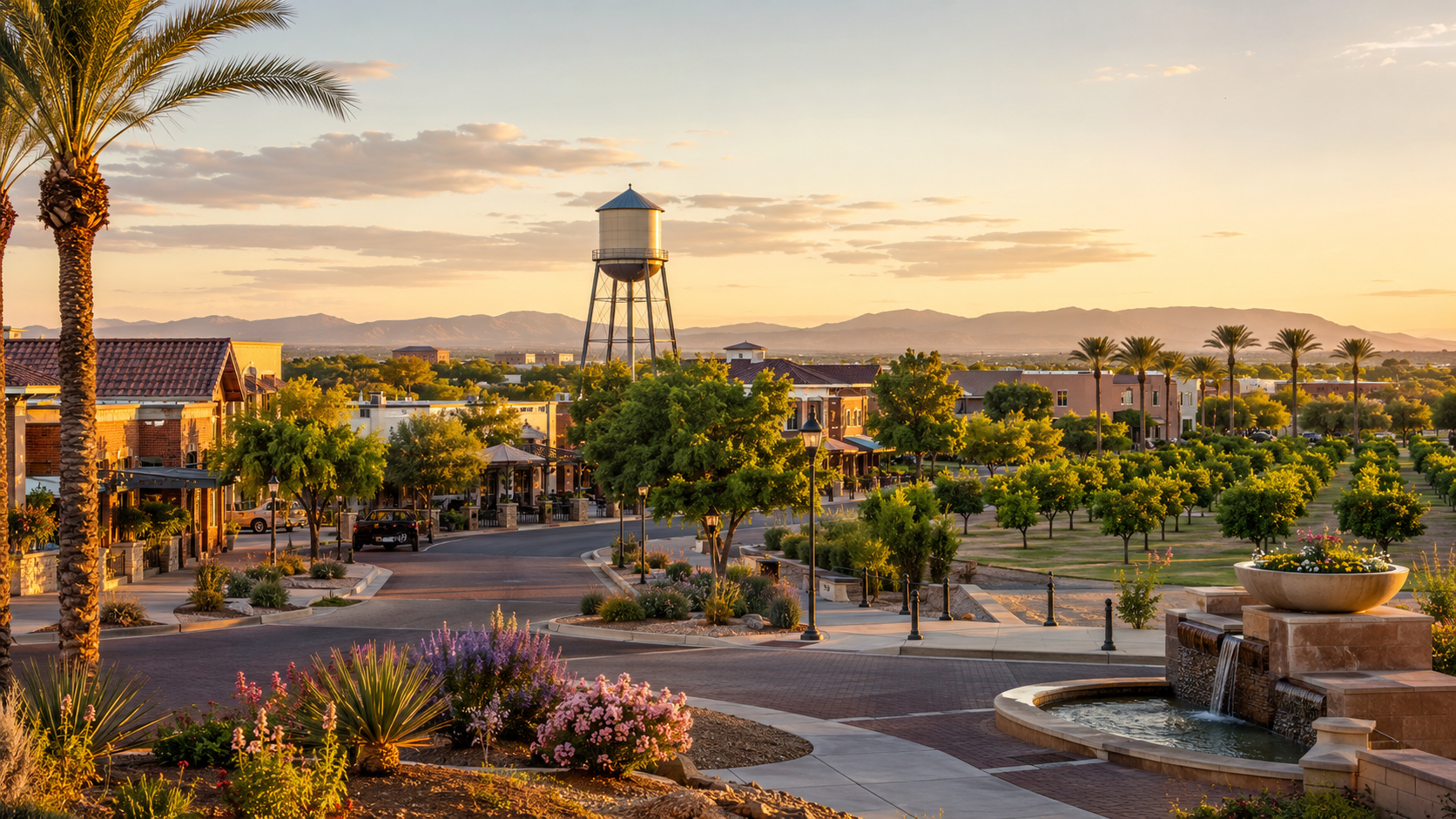
Living in Gilbert
Gilbert sits southeast of Phoenix within Maricopa County. Once rooted in agriculture, the community has grown into a large, economically diverse suburb.
Unlike denser Arizona cities, Gilbert mainly features low-rise development and residential communities. Therefore, daily life often feels suburban and family-oriented.
Choosing a Gilbert Neighborhood
Central Gilbert provides established neighborhoods near the Downtown Heritage District. The area includes local restaurants, retail businesses, community events, and the recognizable Gilbert Water Tower.
Meanwhile, Morrison Ranch, Power Ranch, Agritopia, Val Vista Lakes, and Seville offer different home styles and community features. Compare HOA rules, schools, commute times, and nearby construction carefully.
Housing in Gilbert
Gilbert offers apartments, townhomes, condominiums, and many single-family neighborhoods. Newer developments are especially common in southern and eastern sections.
Before purchasing, review property taxes, zoning, flood information, HOA costs, and utility responsibilities. Additionally, research planned road or development projects near the property.
Working in Gilbert
Gilbert supports employment in healthcare, education, technology, professional services, retail, manufacturing, and government. Nearby Chandler, Mesa, Tempe, and Phoenix provide additional job centers.
However, workplace location should influence your housing decision. A cross-Valley commute may become lengthy during heavy traffic.
Getting Around Gilbert
Most residents depend on personal vehicles. Loop 202, U.S. Route 60, Gilbert Road, Val Vista Drive, and other major streets connect the community.
Valley Metro also operates regional bus and commuter services involving Gilbert. Light rail currently ends near Gilbert Road and Main Street in neighboring Mesa.
Airport Access
Phoenix-Mesa Gateway Airport is convenient for many southeastern Gilbert neighborhoods. Phoenix Sky Harbor International Airport provides broader domestic and international service.
Travel time depends heavily on neighborhood location and traffic. Therefore, check both airports before booking regular travel.
Preparing for Desert Weather
Gilbert experiences very hot summers and mild winters. Reliable air conditioning, shaded parking, hydration, and manageable electricity costs deserve careful attention.
Monsoon storms can also produce dust, strong winds, lightning, and localized flooding. As a result, seasonal emergency preparation remains important.
Schools and Education
Gilbert Public Schools serves many local addresses and operates schools in both Gilbert and Mesa. Its school finder helps families confirm boundaries and enrollment options.
Some neighborhoods fall within other districts, including Higley Unified School District. Therefore, verify the assigned district and campus before choosing a home.
Parks and Outdoor Recreation
Gilbert maintains more than 600 acres of open space, numerous park ramadas, and a riparian area. Residents can also access sports fields, recreation programs, trails, playgrounds, and aquatic facilities.
Popular destinations include Gilbert Regional Park, Freestone Park, and the Riparian Preserve at Water Ranch. Outdoor activities are usually most comfortable during cooler months.
Shopping, Dining, and Entertainment
The Downtown Heritage District provides restaurants, shops, gathering spaces, and local character. SanTan Village offers larger retail, dining, and entertainment choices.
Additionally, Agritopia combines restaurants, local businesses, residential spaces, and agricultural roots. Nearby Mesa and Chandler further expand entertainment options.
Setting Up Utilities
Gilbert provides several municipal utility services, while electric service may depend on the address. Arizona Public Service is among the utility providers serving parts of Gilbert.
Contact every provider before moving. This step helps confirm deposits, service dates, trash schedules, and account requirements.
Final Thoughts
Gilbert Arizona combines suburban living, modern amenities, parks, schools, and East Valley convenience. Its neighborhoods offer several housing styles and community environments.
Most importantly, compare school boundaries, HOA costs, cooling expenses, and commute routes before selecting your new home.